

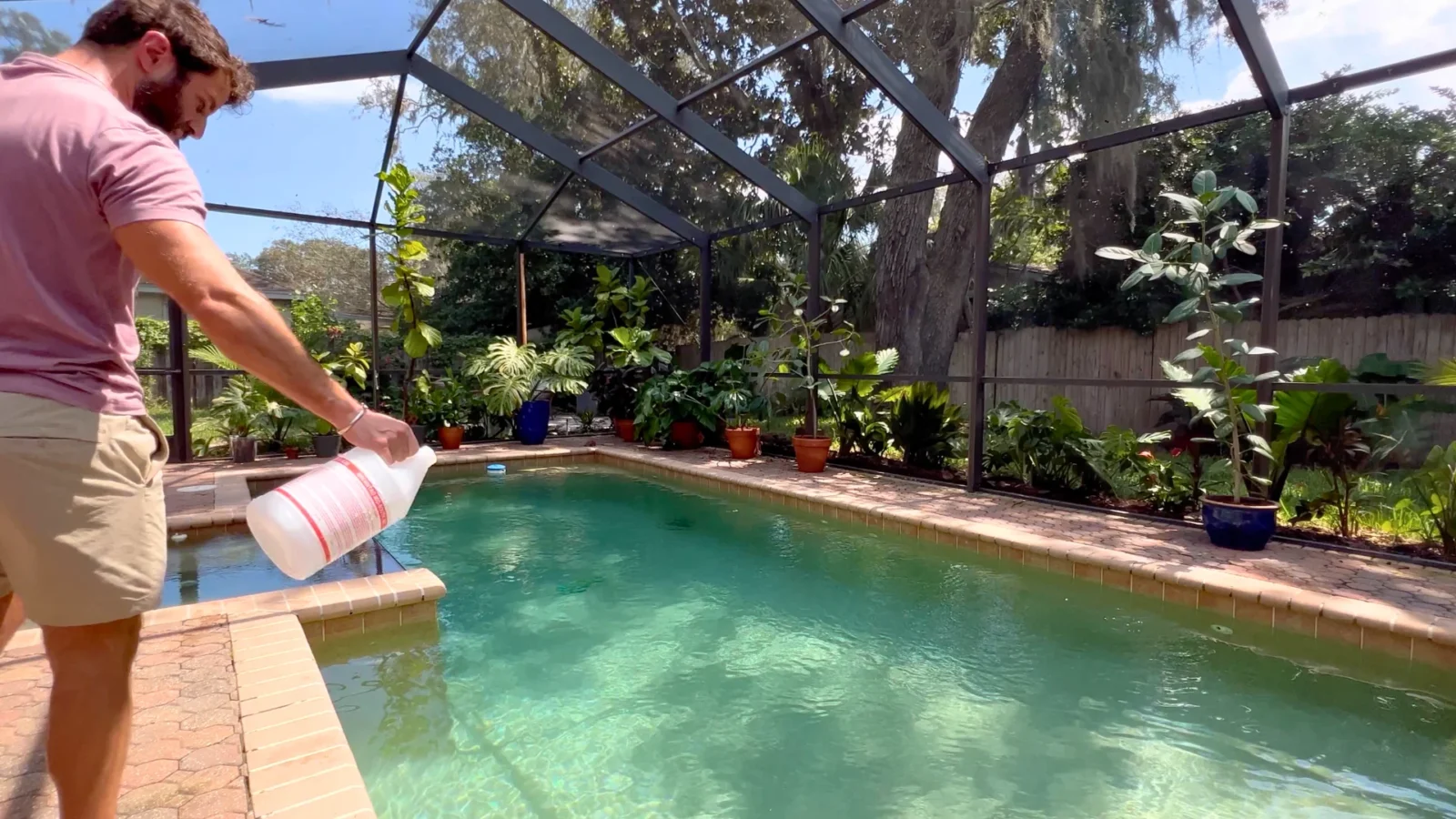
The general rule: 1 pint (16 oz) of muriatic acid per 10,000 gallons of pool water will lower the pH by approximately 0.2 points. However, if your pH is significantly high (above 8.4), a 10,000-gallon pool may require up to 1 quart (32 oz) to reach the ideal range of 7.4–7.6.
Always test your total alkalinity first; if it’s outside the 80–120 ppm range, the pH will be difficult to stabilize. When considering “how much muriatic acid to lower ph in pool,” always add the acid to a bucket of water first (never water to acid) before pouring it into the deep end.
This is a guide that prioritizes safety as much as chemistry. Muriatic acid is powerful – it requires care every step of the way.
Quick Dosing Reference
| Pool Size | Lower pH by 0.2 | Lower pH by 0.5 | Lower pH by 1.0 |
|---|---|---|---|
| 10,000 gallons | 1 pint (16 oz) | 2.5 pints | 5 pints |
| 15,000 gallons | 1.5 pints | ~4 pints | ~7.5 pints |
| 20,000 gallons | 2 pints (1 quart) | ~5 pints | ~10 pints |
| 25,000 gallons | 2.5 pints | ~6 pints | ~12 pints |
These are starting estimates – always start with the lower dose, retest after 4-6 hours, and add more if needed.
Target pH Range
| Level | Status |
|---|---|
| Below 7.0 | Too acidic – irritates eyes, corrodes surfaces |
| 7.0-7.2 | Slightly low – acceptable |
| 7.2-7.6 | Ideal range |
| 7.6-7.8 | Slightly high – chlorine less effective |
| Above 7.8 | Too alkaline – cloudy water, scaling, poor chlorine performance |
If your pH is above 7.8, it’s time to add muriatic acid.
Safety First – Don’t Skip This Section
Muriatic acid (hydrochloric acid) is a strong industrial chemical. Before you touch the bottle:
- Wear chemical-resistant gloves, safety glasses, and old clothes – it will burn skin and destroy fabric on contact
- Never add water to acid – always add acid to water (this is critical)
- Work in a ventilated area – fumes are corrosive to lungs
- Keep children and pets away from the pool for at least 30-60 minutes after adding
- Store upright in a cool, dry area away from chlorine products – mixing acid and chlorine creates toxic gas
Step-by-Step: How to Add Muriatic Acid to Your Pool
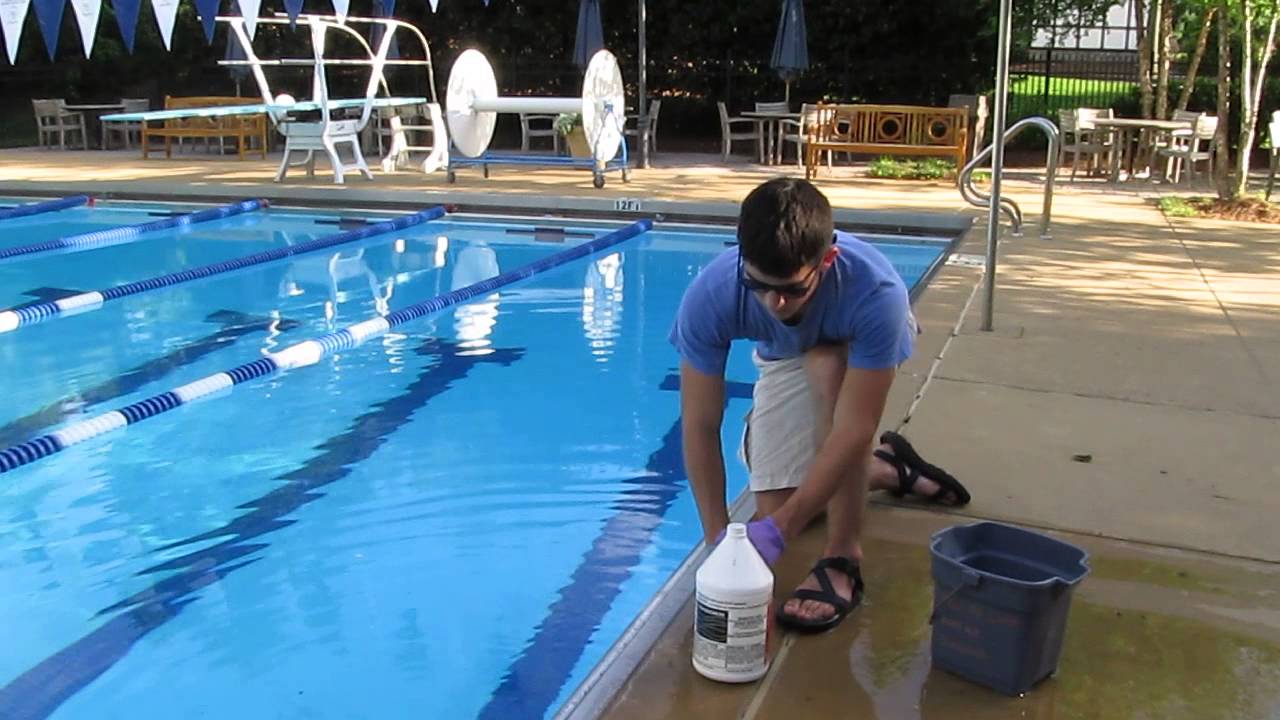
Step 1: Test the Water
Use a test kit or test strips to get the current pH and total alkalinity readings. Don’t estimate – accurate numbers prevent over-dosing.
Step 2: Calculate Your Dose
Use the table above as your starting point. When in doubt, dose conservatively – you can always add more.
Step 3: Run the Pump
Turn on the pool pump to ensure circulation before and during treatment.
Step 4: Pre-Dilute (Optional but Safer)
For extra safety, fill a bucket with pool water first, then slowly pour in the measured acid amount. Diluting first reduces the concentration at the pour point.
Step 5: Add to the Deepest Part
Walk to the deep end. With the pump running, slowly pour the acid (or diluted mixture) directly into the pool in a sweeping motion – don’t dump it in one spot.
Step 6: Wait and Retest
Wait at least 4-6 hours (or one full circulation cycle) before retesting. Then check pH again and add more acid if still above 7.6.
High Alkalinity Complicates Things
Total alkalinity and pH are linked. If your total alkalinity is very high (above 120 ppm), it will continuously push your pH up – meaning you’ll keep fighting the same battle.
In this case, you may need to aerate the pool after bringing alkalinity down with acid. Aeration (running fountains, waterfalls, or just letting the pump run with the return jets pointing up) raises pH naturally without affecting alkalinity.
Warning Signs You’ve Added Too Much
If over-dosed, raise pH back up with sodium carbonate (soda ash) – 6 oz per 10,000 gallons raises pH by approximately 0.2 points.
The Bottom Line
Start with small doses, test frequently, and be patient. Muriatic acid works fast – you don’t need to dump in large amounts. A methodical approach keeps your pool in the ideal 7.2-7.6 range and your swimmers comfortable all season.