

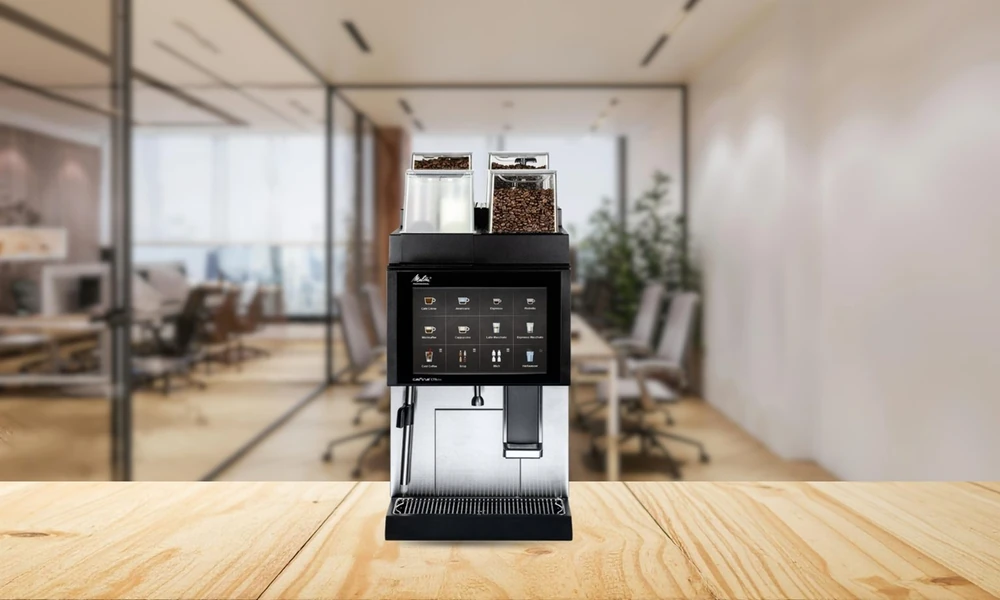
Not every part of an office needs the same coffee setup, and one of the more overlooked planning mistakes is treating a single machine choice as the answer for every space a company operates, from a client-facing reception area to a back-office floor where staff just want caffeine between tasks. Companies that default to a single machine model across every location often discover the mismatch only after staff start complaining or visitors notice a setup that feels out of step with the meeting they’re attending, at which point fixing it costs more than planning properly the first time around.
Reception and Client-Facing Areas
The coffee served to a visitor sitting in reception before a meeting carries outsized weight relative to its cost, since it’s often the first tangible thing a guest experiences beyond the physical space itself. A compact bean-to-cup machine with genuine espresso and milk-drink capability tends to suit these areas well, since it lets reception staff or the visitor themselves produce a polished drink quickly without needing barista training. Appearance matters more here too, and a sleek, quiet unit fits the tone of a reception area better than a bulkier industrial machine designed purely for throughput. Some companies also consider placing the machine visibly within reception itself, turning the act of preparing a visitor’s coffee into a small, deliberate piece of hospitality rather than something that happens out of sight in a back pantry.
Open-Plan Work Floors
The main work floor is where volume matters most, and the best fit here usually depends on how many people are drawing from a single machine during peak windows. A mid-to-high-capacity bean-to-cup or capsule system with fast recovery time keeps queues short during the morning rush, while placement close to but not directly inside a quiet work zone helps manage noise from grinding and brewing cycles. Larger floors sometimes benefit from splitting demand across two smaller machines in different pantry points rather than relying on a single large unit that becomes a bottleneck and a single point of failure if it goes down. This kind of redundancy also means a breakdown in one machine doesn’t leave an entire floor without coffee while waiting for a technician, since the second unit can absorb demand in the meantime.
Meeting Rooms and Executive Areas
Dedicated coffee service for meeting rooms and executive floors often justifies a higher-end bean-to-cup machine capable of producing a wider drink range, since these spaces host client negotiations, board discussions, and interviews where the quality of the coffee is part of the overall impression a company makes. Some offices choose to keep these machines separate from general staff areas specifically to avoid queuing conflicts during important meetings, prioritising immediate availability over shared efficiency. A machine dedicated to this purpose also tends to see lighter, more predictable use than one shared across a whole floor, which can extend its working life and reduce how often it needs intensive servicing.
Operations Floors and High-Throughput Environments
Call centres, warehouses, and other operations-heavy environments generally prioritise a different set of qualities: high volume, low cost per cup, and minimal downtime risk over drink variety or presentation. A robust filter or batch brew system, or a simple, high-capacity capsule machine, tends to serve this environment better than an elaborate bean-to-cup unit that introduces more components that could fail under continuous heavy use. Staff in these settings usually want reliable caffeine available at any point in a shift rather than a curated coffee experience. Downtime carries a different cost here too, since a machine failure during a night shift with no facilities staff on hand can leave a whole team without coffee until the next business day, which makes reliability a bigger priority than drink variety in these environments.
Satellite and Smaller Offices
Smaller satellite locations or co-working arrangements often do best with a compact, simple machine that doesn’t require dedicated servicing infrastructure on-site, since these locations may not have the same facilities support as a headquarters office. A capsule system frequently fits this need well, offering consistency and easy operation without demanding the same level of technical maintenance that a full bean-to-cup unit requires. Since satellite offices often have lower and more irregular headcounts than a main location, matching machine capacity to that smaller, less predictable demand also avoids paying for throughput the space will rarely use.
Matching the Right Machine to Each Space
Because different areas of a company genuinely call for different equipment, it’s worth approaching machine selection space by space rather than picking one model to cover an entire office. A supplier offering a full spread of options, such as the range found under Daiohs’ coffee machine lineup, makes this kind of multi-location planning easier, since you can match reception, work floor, and operations areas to appropriately different tiers within a single relationship rather than juggling multiple vendors.
Revisiting the Setup as the Office Changes
A machine plan that fit well at the time of installation doesn’t necessarily stay right forever, particularly for companies that grow headcount, shift floor layouts, or change how often staff are actually in the office across a given week. What worked for a fifty-person floor can start to strain at eighty, and a reception machine chosen for occasional client visits might see far more use once a company shifts to hosting more in-person meetings than before. Treating the coffee setup as something worth revisiting every year or two, rather than a one-time decision made during a fit-out, keeps each space matched to how it’s actually being used rather than how it was used when the machines first went in.
The best coffee machine for office use isn’t a single universal answer but a set of choices tailored to what each space in your company actually needs, whether that’s polish for visitors, throughput for a busy floor, or simple reliability for a satellite location. Approaching the decision space by space, rather than searching for one machine to solve every scenario, produces a setup that actually holds up once real daily use starts testing it.